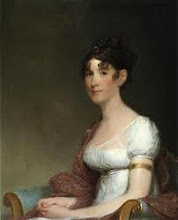
It's time for Book Talk, a Confessions of an Avid Reader weekly feature that offers a forum in which to discuss book-related issues and topics. This week's topic: Historical Accuracy in Historical Fiction.
There is some debate as to whether or not historical novelists should, to the greatest extent possible, be historically accurate in their works. Some readers and authors feel it is of the utmost importance, while others don't. My intent with this discussion is not to revisit this debate, especially since I think there is a wide enough selection of historical novels available today to satisfy all readers no matter what their preference, but rather to get a sense for what my fellow bloggers prefer.
Because many of the historical novels I read feature real historical figures and events as central components of the plots, I prefer to read those that are as historically accurate as possible. Nevertheless, I recognize that sometimes liberties need to be taken for the sake of a story, and generally don't have an issue with this so long as they are minor and explained in an Author's Note.
This is not to say I don't read or enjoy historical novels in which significant liberties are taken, because let's face it, a great story is a great story regardless of whether it is historically accurate or not. I do, however, tend to gravitate towards books written by historical novelists who take great care in ensuring accuracy, and most of my favourite historical novels are recognized for this.
So my fellow historical fiction lovers, is historical accuracy important to you as a reader or is it not a big deal?
Thursday, March 28, 2013
Wednesday, March 27, 2013
Book Review: The Bruges Tapestry by P.A. Staes
Synopsis:
Following a 500-year-old mystery concerning a Flemish tapestry is routine work for Detective Claire DeMaer, since she's employed by the Newport Beach Art Theft Detail. But, unlike past cases, this one involves arresting Paolo Campezzi, lover to her best friend Nora. Mr. Campezzi is a distant descendant of a Florentine Duke, who commissioned the tapestry in 1520 in Bruges, Belgium.
Claire finds that she must explore the true provenance of the tapestry, free Mr. Campezzi in order to re-establish her friendship with Nora and depend on the expertise of a textile expert she doesn't know. All this must occur in 72 hours, before the Vatican takes the tapestry back.
But Claire isn't the only one with the Vatican looking over her shoulder. Claire's story intertwines with a 1520 diary by Beatrice van Hecke, the tapestry-weaver's daughter. Only Claire can discover the secret that is woven in time.
Createspace | August 29, 2012 | 254 pages
My Review
3 Stars
The Bruges Tapestry is a time slip novel that alternates between modern-day California and 16th century Belgium. At the centre of this novel is a 500-year old tapestry that has recently been stolen from the Vatican, a tapestry that happens to be hanging in the home of Detective Claire DeMaer's best friend Nora's new boyfriend, Paolo. The case against Paolo isn't as straightforward as it first appears, however, as he claims he was simply taking back what was rightfully the property of his family. Although Paolo has no evidence to back up his claims, Claire, in an effort to preserve her friendship with Nora, sets out to prove Paolo's assertions are true. Interwoven with Claire's investigation into the true ownership of the tapestry is the story of Beatrice, the daughter of a 16th century Bruges tapestry maker. Through Beatrice the reader comes to learn of the tapestry's origins, as well as the reasons behind some of the tapestry's unusual design elements.
The Bruges Tapestry is a well-written and quick-paced mystery. Usually when I read time slip novels I develop a distinct preference for either the modern or historic narrative. In the case of this novel, however, I found both narratives to be equally compelling. Although it did take me awhile to warm up to Claire, by the end of the book I had come to like her as a character. In fact, I quite liked all of principal characters from the modern-day storyline. Conversely, with the exception of Beatrice, I didn't find the historic characters to be particularly well drawn, especially the villains, who come across as one-dimensional. The only major problem I had with this book was the ending of the modern-day tale which, although ultimately satisfying, felt much too rushed. I would have preferred the ending to have been drawn out and, given the short length of this novel, I think the author could have done so without negatively impacting the conclusion. Despite my issue with the ending I did enjoy the novel overall and look forward to seeing where P.A. Staes takes Detective DeMaer next.
Recommended to fans of art-related mysteries and thrillers, as well as to readers who enjoy time slip novels.
Note: I received a copy of this novel as part of P.A. Staes Virtual Book Tour in exchange for a fair and honest review.
The Bruges Tapestry is now on tour. Click here to check out the tour schedule. You can also follow the tour on Twitter: #BrugesTapestryVirtualTour
About the Author
P.A. Staes is the author of The Bruges Tapestry; the first of the Clare DeMaere series of historical mysteries. To lend veracity to The Bruges Tapestry Ms. Staes traveled to Stirling Castle in Scotland, The Victoria and Albert Museum in London, The Cluny Museum and Gobelin Factory in Paris, and the Metropolitan Museum of Art and The Cloisters to bring alive the rich and romantic world of tapestry. Ms. Staes lives in Southern California with her husband and two dogs.
For more information, please visit P.A. Staes's WEBSITE and BLOG.
Following a 500-year-old mystery concerning a Flemish tapestry is routine work for Detective Claire DeMaer, since she's employed by the Newport Beach Art Theft Detail. But, unlike past cases, this one involves arresting Paolo Campezzi, lover to her best friend Nora. Mr. Campezzi is a distant descendant of a Florentine Duke, who commissioned the tapestry in 1520 in Bruges, Belgium.
Claire finds that she must explore the true provenance of the tapestry, free Mr. Campezzi in order to re-establish her friendship with Nora and depend on the expertise of a textile expert she doesn't know. All this must occur in 72 hours, before the Vatican takes the tapestry back.
But Claire isn't the only one with the Vatican looking over her shoulder. Claire's story intertwines with a 1520 diary by Beatrice van Hecke, the tapestry-weaver's daughter. Only Claire can discover the secret that is woven in time.
Createspace | August 29, 2012 | 254 pages
My Review
3 Stars
The Bruges Tapestry is a time slip novel that alternates between modern-day California and 16th century Belgium. At the centre of this novel is a 500-year old tapestry that has recently been stolen from the Vatican, a tapestry that happens to be hanging in the home of Detective Claire DeMaer's best friend Nora's new boyfriend, Paolo. The case against Paolo isn't as straightforward as it first appears, however, as he claims he was simply taking back what was rightfully the property of his family. Although Paolo has no evidence to back up his claims, Claire, in an effort to preserve her friendship with Nora, sets out to prove Paolo's assertions are true. Interwoven with Claire's investigation into the true ownership of the tapestry is the story of Beatrice, the daughter of a 16th century Bruges tapestry maker. Through Beatrice the reader comes to learn of the tapestry's origins, as well as the reasons behind some of the tapestry's unusual design elements.
The Bruges Tapestry is a well-written and quick-paced mystery. Usually when I read time slip novels I develop a distinct preference for either the modern or historic narrative. In the case of this novel, however, I found both narratives to be equally compelling. Although it did take me awhile to warm up to Claire, by the end of the book I had come to like her as a character. In fact, I quite liked all of principal characters from the modern-day storyline. Conversely, with the exception of Beatrice, I didn't find the historic characters to be particularly well drawn, especially the villains, who come across as one-dimensional. The only major problem I had with this book was the ending of the modern-day tale which, although ultimately satisfying, felt much too rushed. I would have preferred the ending to have been drawn out and, given the short length of this novel, I think the author could have done so without negatively impacting the conclusion. Despite my issue with the ending I did enjoy the novel overall and look forward to seeing where P.A. Staes takes Detective DeMaer next.
Recommended to fans of art-related mysteries and thrillers, as well as to readers who enjoy time slip novels.
Note: I received a copy of this novel as part of P.A. Staes Virtual Book Tour in exchange for a fair and honest review.
The Bruges Tapestry is now on tour. Click here to check out the tour schedule. You can also follow the tour on Twitter: #BrugesTapestryVirtualTour
About the Author
P.A. Staes is the author of The Bruges Tapestry; the first of the Clare DeMaere series of historical mysteries. To lend veracity to The Bruges Tapestry Ms. Staes traveled to Stirling Castle in Scotland, The Victoria and Albert Museum in London, The Cluny Museum and Gobelin Factory in Paris, and the Metropolitan Museum of Art and The Cloisters to bring alive the rich and romantic world of tapestry. Ms. Staes lives in Southern California with her husband and two dogs.For more information, please visit P.A. Staes's WEBSITE and BLOG.
Monday, March 25, 2013
Book Review: The Last Summer by Judith Kinghorn
Synopsis:
I was almost seventeen when the spell of my childhood was broken...It was the beginning of summer and, unbeknown to any of us then, the end of a belle epoque...
In July of 1914, innocent, lovely Clarissa Granville lives with her parents and three brothers in the idyllic isolation of Deyning Park, a grand English country house, where she whiles away her days enjoying house parties, country walks and tennis matches. Clarissa is drawn to Tom Cuthbert, the housekeeper's handsome son. Though her parents disapprove of their upstairs-downstairs friendship, the two are determined to see each other, and they meet in secret to share what becomes a deep and tender romance. But soon the winds of war come to Deyning, as they come to all of Europe. As Tom prepares to join the front lines, neither he nor Clarissa can envision what lies ahead of them in the dark days and years to come. Nor can they imagine how their love will be tested, or how they will treasure the memory of this last, perfect summer.
NAL Trade | December 31, 2012 | 464 pages
My Review
4.5 Stars
Judith Kinghorn's debut novel, The Last Summer, is the type of book you'll want to curl up with and not put down. The novel opens in England in July of 1914, at Deyning Park, the stately country home of the wealthy Granville family. For Clarissa Granville, the youngest child and only daughter, the summer is a time to relax and spend time with family and friends. Rather than spend time with those in her own circle, however, Clarissa befriends Tom Cuthbert, the son of Deyning Park's housekeeper. Although her parents do not approve of her burgeoning friendship with Tom, Clarissa refuses to end it. As the weeks pass, Clarissa and Tom's relationship deepens and becomes much more than one of simple friendship. When the events that have been threatening peace in Europe erupt into a full-scale war, the lives of those at Deyning Park, like those of all inhabitants of Great Britain, are forever changed. What follows is a story of love and loss, of lives torn apart by war, and of a society undergoing immense social change.
Judith Kinghorn's eloquent prose evokes a strong sense of both time and place. As a result, The Last Summer effectively conveys how the Great War brought forth the end of an era, and with it a loss of innocence. The novel also successfully captures the horrors of war, the efforts of those back at home to carry-on, and the post-war struggles of those who survived, who must now pick up the pieces of their lives and come to terms with a significantly altered society. The Last Summer features many memorable characters, all of whom are well-developed and engaging. Clarissa, whose voice is used to tell this story, is particularly well-drawn, and her maturation and growth are clearly evident as the novel progresses. Clarissa's complex relationship with Tom, which underpins the entire narrative and in many respects comes to define both of their lives, is also well done and completely draws the reader into the story. One of my favourite aspects of this novel is the role of Deyning Park in the narrative. Featured throughout the book, Deyning Park becomes a principal character. In many ways the changes that occurred to this great house mirror those that take place within English society as a whole.
An excellent novel, The Last Summer is highly recommended to readers of historical fiction interested in WWI and post-WWI England.
Note: This novel comes from my own personal collection.
I was almost seventeen when the spell of my childhood was broken...It was the beginning of summer and, unbeknown to any of us then, the end of a belle epoque...
In July of 1914, innocent, lovely Clarissa Granville lives with her parents and three brothers in the idyllic isolation of Deyning Park, a grand English country house, where she whiles away her days enjoying house parties, country walks and tennis matches. Clarissa is drawn to Tom Cuthbert, the housekeeper's handsome son. Though her parents disapprove of their upstairs-downstairs friendship, the two are determined to see each other, and they meet in secret to share what becomes a deep and tender romance. But soon the winds of war come to Deyning, as they come to all of Europe. As Tom prepares to join the front lines, neither he nor Clarissa can envision what lies ahead of them in the dark days and years to come. Nor can they imagine how their love will be tested, or how they will treasure the memory of this last, perfect summer.
NAL Trade | December 31, 2012 | 464 pages
My Review
4.5 Stars
Judith Kinghorn's debut novel, The Last Summer, is the type of book you'll want to curl up with and not put down. The novel opens in England in July of 1914, at Deyning Park, the stately country home of the wealthy Granville family. For Clarissa Granville, the youngest child and only daughter, the summer is a time to relax and spend time with family and friends. Rather than spend time with those in her own circle, however, Clarissa befriends Tom Cuthbert, the son of Deyning Park's housekeeper. Although her parents do not approve of her burgeoning friendship with Tom, Clarissa refuses to end it. As the weeks pass, Clarissa and Tom's relationship deepens and becomes much more than one of simple friendship. When the events that have been threatening peace in Europe erupt into a full-scale war, the lives of those at Deyning Park, like those of all inhabitants of Great Britain, are forever changed. What follows is a story of love and loss, of lives torn apart by war, and of a society undergoing immense social change.
Judith Kinghorn's eloquent prose evokes a strong sense of both time and place. As a result, The Last Summer effectively conveys how the Great War brought forth the end of an era, and with it a loss of innocence. The novel also successfully captures the horrors of war, the efforts of those back at home to carry-on, and the post-war struggles of those who survived, who must now pick up the pieces of their lives and come to terms with a significantly altered society. The Last Summer features many memorable characters, all of whom are well-developed and engaging. Clarissa, whose voice is used to tell this story, is particularly well-drawn, and her maturation and growth are clearly evident as the novel progresses. Clarissa's complex relationship with Tom, which underpins the entire narrative and in many respects comes to define both of their lives, is also well done and completely draws the reader into the story. One of my favourite aspects of this novel is the role of Deyning Park in the narrative. Featured throughout the book, Deyning Park becomes a principal character. In many ways the changes that occurred to this great house mirror those that take place within English society as a whole.
An excellent novel, The Last Summer is highly recommended to readers of historical fiction interested in WWI and post-WWI England.
Note: This novel comes from my own personal collection.
Sunday, March 24, 2013
Suddenly Sunday
It's time for Suddenly Sunday, a weekly meme hosted by Svea at Muse in the Fog that gives bloggers the opportunity to share their blogging events from the past week. I've been busy this past week posting reviews, giveaways and a guest post, and just generally trying to get caught up in my reading after returning from holiday. In case you missed any of my reviews and/or giveaways, be sure to check them out by clicking on the book titles below:
- Review and International Giveaway for Lady of Ashes by Christine Trent;
- Review and CAN/US Giveaway for Enchantments by Kathryn Harrison; and
- Review of The Chalice by Nancy Bilyeau.
In addition, be sure to check out author Nancy Bilyeau's fabulous guest post, The Life of A Real Tudor Nun (click here to read post).
This coming week I'll be posting my review of each of the following books:
- The Last Summer by Judith Kinghorn;
- The Bruges Tapestry by P.A. Staes; and
- A Conspiracy of Alchemists by Liesel Schwarz.
In addition to posting reviews, I'll also return to posting my weekly Book Talk meme, although I have yet to determine a topic. Now that I've settled back in after holidays and am getting caught up on my review books, I'm also going to make more of an effort to respond to blog comments and to visit other blogs.
Reading-wise, I've just started to read Bristol House by Beverly Swerling, a time slip novel that alternates between modern-day and Tudor London. I'm hooked!
What are you currently reading?
Friday, March 22, 2013
The Life of a Real Tudor Nun: A Guest Post by Nancy Bilyeau
I'm very pleased to welcome author Nancy Bilyeau to the blog today as part of her virtual tour for her recently released Tudor-era historical novel, The Chalice (you can check out my review here).
******
The protagonist of both my novels, The Crown and The Chalice, is a fictional young woman named Joanna Stafford who has taken novice vows at a Dominican priory in Dartford, Kent. The books are set in the late 1530s, in the throes of Henry VIII’s Dissolution of the Monasteries, and what drives both plots is Joanna’s struggle with losing her home and her way of life.
I’ve been asked if Joanna is based on anyone from history and the answer is no. There wasn’t very much known of any of the 1,800 nuns in England at the time of the Dissolution. In my five years of research while writing The Crown, the only contemporary documents I could find were a few letters and wills. The nonfiction books about Henry VIII’s break from Rome focused on the king, his wives and his ministers Thomas Wolsey and Thomas Cromwell. The nuns, monks and friars who were forced from their homes were nameless shadows in the corners of rooms dominated by these huge personalities.
I created Joanna in my imagination, based on the known facts about what life in a priory was like and what kinds of families sent their daughters there. But after I’d finished The Crown, I unearthed some facts about Elizabeth Exmewe, one of the young nuns who really did live in Dartford in the 1530s at the time of Dissolution. While writing The Chalice, I did not change Joanna to be more like her. But I kept thinking about Elizabeth and her many hard years of struggle and wandering.
Dartford Priory, founded by Edward III, drew women from the gentry and aristocracy, even one from royalty. Princess Bridget Plantagenet, youngest sister of Elizabeth of York, was promised to Dartford as a baby. She lived there from childhood until her death in 1517. Elizabeth Exmewe was typical of most of the other nuns—she was the daughter of a gentleman, Sir Thomas Exmewe. He was a goldsmith and “merchant adventurer,” serving as Lord Mayor of London.
It was common for brothers and sisters to enter monastic life together, though at separate places. Elizabeth’s brother, William Exmewe, was a Carthusian monk and respected scholar of Greek and Latin at the London Charterhouse. He was also one of the monks who in 1535 refused to sign the Oath of Supremacy to Henry VIII, despite intense pressure. The king had broken from the Pope because he could not get a divorce from Catherine of Aragon and marry Anne Boleyn. Once the king became head of the Church of England, it was imperative that all monks shift their loyalty to him. But Exmewe would not compromise his beliefs, and he was punished with a horrifying death: He was hanged, disemboweled while still alive and quartered.
No nun in England was executed besides Sister Elizabeth Barton, a Benedictine who prophesied against the king’s marriage to Anne Boleyn. Barton was arrested, tortured, tried, and hanged for it. Elizabeth Exmewe did not publicly criticize the king nor seek martyrdom. Four years after the death of her brother, she was turned out from Dartford Priory.
When the occupants of religious houses opposed Henry VIII, retaliation was savage. When the houses “surrendered,” small pensions were arranged. Elizabeth Exmewe received a pension of “100 shillings per annum.” This was the amount that most Dartford nuns received. Some of the thousands of monks and friars who were turned out of their monasteries in the 1530s became priests or teachers or apothecaries. But nuns—roughly 1,800 of them at the time of the Dissolution--did not have such options. “Those who had relatives sought asylum in the bosom of their own family,” wrote a 19th century historian. Marriage was not an option. In 1539, the most conservative noble, the Duke of Norfolk, introduced to Parliament “the Act of Six Articles,” which forbade ex-nuns and monks from marrying. The act, which had the approval of Henry VIII, became law. The king did not want nuns in the priory but he did not want them to marry either. There was literally no place for them in England.
Sisters who could afford it immigrated to Catholic countries to search for priories that would take them in. Others lacking family support sank into poverty. A few historians studying the Dissolution have noted a remarkable fact: in several cases, nuns attempted to live together in small groups after being forced from their priories. They were determined to continue their vocations, in whatever way they could.
Elizabeth Exmewe is known to have shared a home in Walsingham with another ex-nun of Dartford. “They were Catholic women of honest conversation,” said one contemporary account. A half-dozen other Dartford refugees tried to live under one roof closer to Dartford. Meanwhile, Henry VIII had their priory demolished. He built a luxurious manor house on the rubble of the Dominican Order, although he’s not believed to have ever slept there. It became the home of his fourth wife, Anne of Cleves, after he divorced her in disgust in 1540.
Following the reign of Henry’s Protestant son, Edward VI, his Catholic daughter, Mary I, took the throne in 1553. Mary re-formed several religious communities as she struggled to turn back time in England and restore the “True Faith.” Elizabeth Exmewe and six other ex-nuns successfully petitioned Queen Mary to re-create their Dominican community at Dartford, which was vacant after the death of Anne of Cleves. They moved into the manor house, built on the home they left 14 years earlier, with two chaplains. The convent life they loved flourished again: the sisters spent their days praying, singing and chanting; gardening; embroidering; and studying.
But the restoration didn’t last long. When Mary died and her Protestant half-sister took the throne, one of Elizabeth’s goals was extinguishing the monastic flames. In 1559 Elizabeth’s first Reformation Parliament repressed all the re-founded convents and confiscated the land.
And so the Dartford nuns were ejected again, this time with no pensions. Mary’s widower, King Philip of Spain, heard of their plight, and paid for a ship to convey the nuns of Dartford and Syon Abbey to Antwerp, in the Low Countries. Paul Lee, in his book Nunneries, Learning and Spirituality in Late Medieval Society, has charted the sisters’ poignant journey after leaving their native land.
After a few months, a new home was secured for them. For the next ten years Elizabeth Exmewe lived “in the poor Dutch Dominican nunnery at Leliendal, near Zierikzee on the western shore of the bleak island of Schouwen in Zeeland.” Several of the English nuns were entering their eighties, with Elizabeth being the youngest. All suffered from illness and near poverty. The Duchess of Parma, hearing of their hardships, sent an envoy to the Dartford nuns. He wrote: “I certainly found them extremely badly lodged. This monastery is very poor and very badly built…. I find that these are the most elderly of the religious and the most infirm, and it seems that they are more than half dead. “ Despite his dire observances, the nuns themselves expressed pride in their convent. Their leader, Prioress Elizabeth Croessner, wrote a letter to the new pope, Pius IV, saying they strove to remain faithful to their vows.
In the 1560s the nuns died, one by one, leaving only Elizabeth Exmewe and her prioress, Elizabeth Croessner. Destitute, the pair moved to Bruges and found yet another convent. They lived through a bout of religious wars, with Calvinists marching through the streets.
The onetime prioress of Dartford, Elizabeth Croessner, died in 1577. Now Elizabeth Exmewe, the daughter of a Lord Mayor and the sister of a Carthusian martyr, was the only one left of her Order. In 1585, she, too, perished in Bruges and was buried by Dominican friars with all honors.
Elizabeth Exmewe is believed to have lived to 76 years of age.
About the Author
Nancy Bilyeau, author of The Crown, is a writer and magazine editor who has worked on the staffs of InStyle, Rolling Stone, Entertainment Weekly, and Good Housekeeping. Her latest position is features editor of Du Jour magazine. A native of the Midwest, she graduated from the University of Michigan. She lives in New York City with her husband and two children.
For more information, please visit Nancy Bilyeau's website. You can also follow her on Facebook and Twitter.
******
The protagonist of both my novels, The Crown and The Chalice, is a fictional young woman named Joanna Stafford who has taken novice vows at a Dominican priory in Dartford, Kent. The books are set in the late 1530s, in the throes of Henry VIII’s Dissolution of the Monasteries, and what drives both plots is Joanna’s struggle with losing her home and her way of life.
I’ve been asked if Joanna is based on anyone from history and the answer is no. There wasn’t very much known of any of the 1,800 nuns in England at the time of the Dissolution. In my five years of research while writing The Crown, the only contemporary documents I could find were a few letters and wills. The nonfiction books about Henry VIII’s break from Rome focused on the king, his wives and his ministers Thomas Wolsey and Thomas Cromwell. The nuns, monks and friars who were forced from their homes were nameless shadows in the corners of rooms dominated by these huge personalities.
I created Joanna in my imagination, based on the known facts about what life in a priory was like and what kinds of families sent their daughters there. But after I’d finished The Crown, I unearthed some facts about Elizabeth Exmewe, one of the young nuns who really did live in Dartford in the 1530s at the time of Dissolution. While writing The Chalice, I did not change Joanna to be more like her. But I kept thinking about Elizabeth and her many hard years of struggle and wandering.
Dartford Priory, founded by Edward III, drew women from the gentry and aristocracy, even one from royalty. Princess Bridget Plantagenet, youngest sister of Elizabeth of York, was promised to Dartford as a baby. She lived there from childhood until her death in 1517. Elizabeth Exmewe was typical of most of the other nuns—she was the daughter of a gentleman, Sir Thomas Exmewe. He was a goldsmith and “merchant adventurer,” serving as Lord Mayor of London.
It was common for brothers and sisters to enter monastic life together, though at separate places. Elizabeth’s brother, William Exmewe, was a Carthusian monk and respected scholar of Greek and Latin at the London Charterhouse. He was also one of the monks who in 1535 refused to sign the Oath of Supremacy to Henry VIII, despite intense pressure. The king had broken from the Pope because he could not get a divorce from Catherine of Aragon and marry Anne Boleyn. Once the king became head of the Church of England, it was imperative that all monks shift their loyalty to him. But Exmewe would not compromise his beliefs, and he was punished with a horrifying death: He was hanged, disemboweled while still alive and quartered.
No nun in England was executed besides Sister Elizabeth Barton, a Benedictine who prophesied against the king’s marriage to Anne Boleyn. Barton was arrested, tortured, tried, and hanged for it. Elizabeth Exmewe did not publicly criticize the king nor seek martyrdom. Four years after the death of her brother, she was turned out from Dartford Priory.
When the occupants of religious houses opposed Henry VIII, retaliation was savage. When the houses “surrendered,” small pensions were arranged. Elizabeth Exmewe received a pension of “100 shillings per annum.” This was the amount that most Dartford nuns received. Some of the thousands of monks and friars who were turned out of their monasteries in the 1530s became priests or teachers or apothecaries. But nuns—roughly 1,800 of them at the time of the Dissolution--did not have such options. “Those who had relatives sought asylum in the bosom of their own family,” wrote a 19th century historian. Marriage was not an option. In 1539, the most conservative noble, the Duke of Norfolk, introduced to Parliament “the Act of Six Articles,” which forbade ex-nuns and monks from marrying. The act, which had the approval of Henry VIII, became law. The king did not want nuns in the priory but he did not want them to marry either. There was literally no place for them in England.
Sisters who could afford it immigrated to Catholic countries to search for priories that would take them in. Others lacking family support sank into poverty. A few historians studying the Dissolution have noted a remarkable fact: in several cases, nuns attempted to live together in small groups after being forced from their priories. They were determined to continue their vocations, in whatever way they could.
Elizabeth Exmewe is known to have shared a home in Walsingham with another ex-nun of Dartford. “They were Catholic women of honest conversation,” said one contemporary account. A half-dozen other Dartford refugees tried to live under one roof closer to Dartford. Meanwhile, Henry VIII had their priory demolished. He built a luxurious manor house on the rubble of the Dominican Order, although he’s not believed to have ever slept there. It became the home of his fourth wife, Anne of Cleves, after he divorced her in disgust in 1540.
Following the reign of Henry’s Protestant son, Edward VI, his Catholic daughter, Mary I, took the throne in 1553. Mary re-formed several religious communities as she struggled to turn back time in England and restore the “True Faith.” Elizabeth Exmewe and six other ex-nuns successfully petitioned Queen Mary to re-create their Dominican community at Dartford, which was vacant after the death of Anne of Cleves. They moved into the manor house, built on the home they left 14 years earlier, with two chaplains. The convent life they loved flourished again: the sisters spent their days praying, singing and chanting; gardening; embroidering; and studying.
But the restoration didn’t last long. When Mary died and her Protestant half-sister took the throne, one of Elizabeth’s goals was extinguishing the monastic flames. In 1559 Elizabeth’s first Reformation Parliament repressed all the re-founded convents and confiscated the land.
And so the Dartford nuns were ejected again, this time with no pensions. Mary’s widower, King Philip of Spain, heard of their plight, and paid for a ship to convey the nuns of Dartford and Syon Abbey to Antwerp, in the Low Countries. Paul Lee, in his book Nunneries, Learning and Spirituality in Late Medieval Society, has charted the sisters’ poignant journey after leaving their native land.
After a few months, a new home was secured for them. For the next ten years Elizabeth Exmewe lived “in the poor Dutch Dominican nunnery at Leliendal, near Zierikzee on the western shore of the bleak island of Schouwen in Zeeland.” Several of the English nuns were entering their eighties, with Elizabeth being the youngest. All suffered from illness and near poverty. The Duchess of Parma, hearing of their hardships, sent an envoy to the Dartford nuns. He wrote: “I certainly found them extremely badly lodged. This monastery is very poor and very badly built…. I find that these are the most elderly of the religious and the most infirm, and it seems that they are more than half dead. “ Despite his dire observances, the nuns themselves expressed pride in their convent. Their leader, Prioress Elizabeth Croessner, wrote a letter to the new pope, Pius IV, saying they strove to remain faithful to their vows.
In the 1560s the nuns died, one by one, leaving only Elizabeth Exmewe and her prioress, Elizabeth Croessner. Destitute, the pair moved to Bruges and found yet another convent. They lived through a bout of religious wars, with Calvinists marching through the streets.
The onetime prioress of Dartford, Elizabeth Croessner, died in 1577. Now Elizabeth Exmewe, the daughter of a Lord Mayor and the sister of a Carthusian martyr, was the only one left of her Order. In 1585, she, too, perished in Bruges and was buried by Dominican friars with all honors.
Elizabeth Exmewe is believed to have lived to 76 years of age.
About the Author
Nancy Bilyeau, author of The Crown, is a writer and magazine editor who has worked on the staffs of InStyle, Rolling Stone, Entertainment Weekly, and Good Housekeeping. Her latest position is features editor of Du Jour magazine. A native of the Midwest, she graduated from the University of Michigan. She lives in New York City with her husband and two children.
For more information, please visit Nancy Bilyeau's website. You can also follow her on Facebook and Twitter.
Thursday, March 21, 2013
Book Review: The Chalice by Nancy Bilyeau
Synopsis:
In the next novel from Nancy Bilyeau after her acclaimed debut The Crown, novice Joanna Stafford plunges into an even more dangerous conspiracy as she comes up against some of the most powerful men of her era.
In 1538, England is in the midst of bloody power struggles between crown and cross that threaten to tear the country apart. Joanna Stafford has seen what lies inside the king’s torture rooms and risks imprisonment again, when she is caught up in a shadowy international plot targeting the King. As the power plays turn vicious, Joanna understands she may have to assume her role in a prophecy foretold by three different seers, each more omniscient than the last.
Joanna realizes the life of Henry VIII as well as the future of Christendom are in her hands—hands that must someday hold the chalice that lays at the center of these deadly prophecies…
Touchstone Publishing | March 5, 2013 | 512 pages
My Review
4 Stars
Nancy Bilyeau's latest novel, The Chalice, reintroduces readers to Joanna Stafford, the heroine of Bilyeau's debut novel The Crown (click here for my review). The Chalice opens a few months after the conclusion of The Crown and finds Joanna, after being forced to leave Dartford Priory when Henry VIII dissolves religious houses across England, settling into a new home in the town of Dartford and trying to start a new life by establishing herself as a tapestry maker. Joanna's life, however, is fated to be anything but peaceful and although she struggles against it, Joanna comes to realize that she may have to engage in activities foretold by prophecy. But these activities put Joanna directly in the path of some of England's most powerful men, including her nemesis Bishop Gardiner, and see her unwittingly become part of a nefarious international plot against the King. While it has been foretold what the repercussions for England will be should the prophecies fail to materialize, Joanna is not comfortable with the role she is slated to play in their realization. As a result, Joanna must look inside herself and determine what to do, even if doing the right thing puts her own life, and the lives of those she loves, at risk.
One of the things I like best about The Chalice, much as I did with The Crown, is that the events within it are entirely plausible. No matter what situation Joanna finds herself in her ability to get out of them doesn't require either superhuman effort on her part or the reader to suspend belief. Joanna continues to be a remarkable character, one for whom it is very easy for readers to like. Nancy Bilyeau has done a great job showing how Joanna struggles to come to terms with both her new life outside of the priory and with her role in the fulfillment of the prophecies. While the bulk of the narrative is concerned with the prophecies, The Chalice does contain a romantic subplot. This subplot, which didn't develop quite the way I thought it would based on events in The Crown, is well-done and interesting. Underlying the narrative is the religious upheaval that is a hallmark of Henry VIII's reign. This theme proves to be one of the most interesting aspects of the novel, especially given the focus is on figures, such as Joanna, most affected by the suppression and dissolution of England's great religious houses.
Fast-paced, well-written, with an engaging storyline and characters, The Chalice is every bit as good as The Crown. I'm very much looking forward to seeing where Joanna Stafford goes next.
Recommended to all fans of historical fiction and historical thrillers/mysteries.
Note: I received a copy of this book from the publisher in exchange for a fair and honest review.
About the Author
Nancy Bilyeau, author of The Crown, is a writer and magazine editor who has worked on the staffs of InStyle, Rolling Stone, Entertainment Weekly, and Good Housekeeping. Her latest position is features editor of Du Jour magazine. A native of the Midwest, she graduated from the University of Michigan. She lives in New York City with her husband and two children.
For more information, please visit Nancy Bilyeau's website. You can also follow her on Facebook and Twitter.
In the next novel from Nancy Bilyeau after her acclaimed debut The Crown, novice Joanna Stafford plunges into an even more dangerous conspiracy as she comes up against some of the most powerful men of her era.
In 1538, England is in the midst of bloody power struggles between crown and cross that threaten to tear the country apart. Joanna Stafford has seen what lies inside the king’s torture rooms and risks imprisonment again, when she is caught up in a shadowy international plot targeting the King. As the power plays turn vicious, Joanna understands she may have to assume her role in a prophecy foretold by three different seers, each more omniscient than the last.
Joanna realizes the life of Henry VIII as well as the future of Christendom are in her hands—hands that must someday hold the chalice that lays at the center of these deadly prophecies…
Touchstone Publishing | March 5, 2013 | 512 pages
My Review
4 Stars
Nancy Bilyeau's latest novel, The Chalice, reintroduces readers to Joanna Stafford, the heroine of Bilyeau's debut novel The Crown (click here for my review). The Chalice opens a few months after the conclusion of The Crown and finds Joanna, after being forced to leave Dartford Priory when Henry VIII dissolves religious houses across England, settling into a new home in the town of Dartford and trying to start a new life by establishing herself as a tapestry maker. Joanna's life, however, is fated to be anything but peaceful and although she struggles against it, Joanna comes to realize that she may have to engage in activities foretold by prophecy. But these activities put Joanna directly in the path of some of England's most powerful men, including her nemesis Bishop Gardiner, and see her unwittingly become part of a nefarious international plot against the King. While it has been foretold what the repercussions for England will be should the prophecies fail to materialize, Joanna is not comfortable with the role she is slated to play in their realization. As a result, Joanna must look inside herself and determine what to do, even if doing the right thing puts her own life, and the lives of those she loves, at risk.
One of the things I like best about The Chalice, much as I did with The Crown, is that the events within it are entirely plausible. No matter what situation Joanna finds herself in her ability to get out of them doesn't require either superhuman effort on her part or the reader to suspend belief. Joanna continues to be a remarkable character, one for whom it is very easy for readers to like. Nancy Bilyeau has done a great job showing how Joanna struggles to come to terms with both her new life outside of the priory and with her role in the fulfillment of the prophecies. While the bulk of the narrative is concerned with the prophecies, The Chalice does contain a romantic subplot. This subplot, which didn't develop quite the way I thought it would based on events in The Crown, is well-done and interesting. Underlying the narrative is the religious upheaval that is a hallmark of Henry VIII's reign. This theme proves to be one of the most interesting aspects of the novel, especially given the focus is on figures, such as Joanna, most affected by the suppression and dissolution of England's great religious houses.
Fast-paced, well-written, with an engaging storyline and characters, The Chalice is every bit as good as The Crown. I'm very much looking forward to seeing where Joanna Stafford goes next.
Recommended to all fans of historical fiction and historical thrillers/mysteries.
Note: I received a copy of this book from the publisher in exchange for a fair and honest review.
Be sure to check the other stops on the tour. You can view the tour schedule by clicking here.
Follow the tour on Twitter: #TheChaliceVirtualTour
About the Author
Nancy Bilyeau, author of The Crown, is a writer and magazine editor who has worked on the staffs of InStyle, Rolling Stone, Entertainment Weekly, and Good Housekeeping. Her latest position is features editor of Du Jour magazine. A native of the Midwest, she graduated from the University of Michigan. She lives in New York City with her husband and two children.
For more information, please visit Nancy Bilyeau's website. You can also follow her on Facebook and Twitter.
Wednesday, March 20, 2013
Book Review and Giveaway: Enchantments by Kathryn Harrison
Synopsis:St. Petersburg, 1917. After Rasputin’s body is pulled from the icy waters of the Neva River, his eighteen-year-old daughter, Masha, is sent to live at the imperial palace with Tsar Nikolay and his family. Desperately hoping that Masha has inherited Rasputin’s healing powers, Tsarina Alexandra asks her to tend to her son, the headstrong prince Alyosha, who suffers from hemophilia. Soon after Masha arrives at the palace, the tsar is forced to abdicate, and the Bolsheviks place the royal family under house arrest. As Russia descends into civil war, Masha and Alyosha find solace in each other’s company. To escape the confinement of the palace, and to distract the prince from the pain she cannot heal, Masha tells him stories—some embellished and others entirely imagined—about Nikolay and Alexandra’s courtship, Rasputin’s exploits, and their wild and wonderful country, now on the brink of an irrevocable transformation. In the worlds of their imagination, the weak become strong, legend becomes fact, and a future that will never come to pass feels close at hand.
Random House | February 26, 2013 (trade paperback) | 352 pages
My Review
3 Stars
Kathryn Harrison's latest novel, Enchantments, takes place primarily in the year leading up to the execution of Russian Tsar Nikolay II and his family. After the murder of their father, Masha and Varya Rasputin are sent to live with the Russian Royal Family. It is Tsarina's hope that Masha has the healing abilities of her late father, Grigori Rasputin, who tended to Prince Alyosha, the Romanov heir who suffered from hemophilia. It is not long after the arrival of the sisters, however, that Tsar Nikolay is forced to abdicate the throne and placed under house arrest with his family. To pass the time and keep Alyosha's mind off his illness, Masha spins stories about the Romanov's, Rasputin, her own childhood and some Russian legends. These stories are intertwined with narrative that is focused on the reality of life under house arrest, as well of Masha's activities after the death of the Romanov's.
I very much enjoyed certain parts of this novel, including the sections of the narrative that give the reader insight into the history of the Romanov downfall, as well as those that provide a glimpse into the life and sufferings of young Alyosha. It is not difficult for the reader to appreciate the pain and despair that young Alyosha must have felt when suffering from a bout of hemophilia. I also liked Harrison's characterization of Grigori Rasputin, who rather than being portrayed as a 'Mad Monk' comes across as a misunderstood and sympathetic figure. Another positive aspect of this novel is Harrison's eloquent prose, which helps to illicit emotion from the reader.
While there is much to like about Enchantments, I do have mixed feelings about this book. Most of the novel is told from Masha's perspective, a character I found difficult to garner an interest in. Although Harrison has a lovely way with words, certain of her descriptions are overdone. While I enjoyed Masha's stories about both the Romanov's and her father, I found myself skimming over those stories that seemingly had little connection to the plot. Masha's post-Revolution life outside of Russia also held little interest to me. Lastly, I thought the constant jumps back and forth in time disruptive to the overall flow of the novel.
Despite my issues with certain aspects of Enchantments, I think the positives of the novel ultimately outweigh the negatives and for this reason I would recommend the book to readers interested in Russian history, as well as to readers who enjoy historical fiction with a more literary bent.
Note: A copy of this book was provided to me by the publisher in exchange for a fair and honest review.Be sure to check out all the other stops on the Enchantments tour -- click here for the tour schedule.
About the AuthorKathryn Harrison is the author of the memoirs The Kiss and The Mother Knot. She has also written the novels Envy, The Seal Wife, The Binding Chair, Poison, Exposure, and Thicker Than Water; a travel memoir, The Road to Santiago; a biography, Saint Thérèse of Lisieux; and a collection of essays, Seeking Rapture. She lives in New York with her husband, the novelist Colin Harrison, and their children.
GIVEAWAY
I'm pleased to host a giveaway for one copy of Enchantments. Giveaway details are as follows:
- The Giveaway is open to US and Canadian residents only;
- To enter simply leave a comment, including your email address, on this post; and
- The Giveaway will be open until midnight (EST) on February 29th.
Good Luck!
Subscribe to:
Posts (Atom)